
Netaji Subhas Chandra Bose: The Man Who Refused to Surrender

He could have chosen a comfortable life, a prestigious career and a future shaped by privilege. Instead, he chose a path filled with uncertainty, exile, imprisonment and danger. His name was Subhas Chandra Bose, but history would remember him as Netaji — a leader whose courage was matched only by the enormity of his dream.
Some lives are remembered for what they achieved. Others are remembered for what they dared to attempt. Subhas Chandra Bose belongs to both.
A Childhood That Carried the Seeds of Rebellion
On 23 January 1897, in Cuttack, Odisha, a boy was born into a respected Bengali family. His father, Janakinath Bose, was a distinguished lawyer, and his mother, Prabhavati Devi, was known for her strong values and devotion to family.
The boy was named Subhas.
He grew up in an atmosphere that valued education, discipline and cultural identity. He was intelligent, introspective and deeply sensitive to the world around him. Yet, beneath his academic abilities, there was a growing dissatisfaction with the political conditions of his country.
British rule was not an abstract subject for young Subhas. It was a reality that shaped the lives of millions of Indians, influencing their opportunities, dignity and freedom.
As he grew older, his questions became more serious. What did it mean to live in a country that could not govern itself? Could education and personal success mean much if the nation remained unfree?
These questions would eventually change the direction of his life.
The Brilliant Student Who Walked Away from a Promising Future
Subhas Bose was academically gifted. He studied at Presidency College and later at Scottish Church College in Calcutta. His intellectual interests extended beyond his formal education, and he developed a strong interest in philosophy and national affairs.
At his family's insistence, he travelled to England to prepare for the Indian Civil Service examination.
In 1920, he passed the examination with distinction, securing a high position among the successful candidates.
For a young Indian of his generation, this was an extraordinary achievement. The Indian Civil Service represented prestige, financial security and an influential career within the colonial administration.
But Subhas faced a question that his examination results could not answer.
Could he serve an administration whose authority he fundamentally opposed?
In 1921, he resigned from the Indian Civil Service before entering service and returned to India.
It was not a decision made for comfort or recognition. He was giving up a future that many would have considered a dream.
For him, however, the freedom of his country mattered more than personal advancement.
The Making of a Leader
<PRIVATE_PERSON> Bose's return to India brought him into closer contact with the growing national movement.
He became associated with Deshbandhu Chittaranjan Das, one of Bengal's most influential political leaders. Das became an important mentor, helping him understand the practical dimensions of political organisation and public leadership.
Subhas gradually emerged as a powerful voice in India's freedom struggle.
He experienced imprisonment, political restrictions and repeated confrontations with British authorities. His involvement in nationalist activities made him a target of colonial surveillance.
His political journey was not always smooth. He had differences with other national leaders, including Mahatma Gandhi, particularly over the pace, strategy and methods of the freedom movement.
While Gandhi believed in non-violent mass resistance, Bose increasingly favoured a more forceful and internationally coordinated approach to ending British rule.
Their disagreement reflected two different political visions, but both were shaped by the same fundamental objective: India's independence.
The President Who Wanted a Different Road to Freedom
By the 1930s, Subhas Chandra Bose had become one of the most prominent leaders of the Indian National Congress.
In 1938, he was elected Congress president at the Haripura session. His vision included industrial development, economic planning, scientific advancement and a strong modern Indian state.
He believed political independence would be incomplete without economic and social transformation.
In 1939, he was re-elected Congress president at Tripuri, defeating Pattabhi Sitaramayya, who had Gandhi's support.
However, serious disagreements within the Congress leadership made it difficult for him to continue. He eventually resigned from the presidency and established the Forward Bloc in 1939.
The differences were significant. Bose wanted a more immediate and uncompromising campaign against British rule, particularly as the international situation was moving towards war.
He believed the Second World War could create an opportunity for India to challenge British authority.
History would soon test that belief.
The Great Escape: A Journey into the Unknown
On 16 January 1941, Subhas Chandra Bose disappeared from British surveillance in Calcutta.
It was one of the most extraordinary episodes of India's freedom struggle.
Under house arrest, he had carefully planned his escape with assistance from members of his family and associates.
Disguised as an insurance agent named Mohammad Ziauddin, he left his residence in Elgin Road and travelled towards Gomoh, now known as Netaji Subhas Chandra Bose Junction.
From there, his journey took him through Peshawar and across difficult routes towards Afghanistan.
His objective was to reach international powers that might help India secure independence.
He eventually travelled to Germany, where he sought support for the Indian independence movement.
The escape was more than an act of personal courage. It demonstrated his determination to pursue his political objective beyond the geographical boundaries of British-controlled India.
He had left behind his familiar world and entered one of the most dangerous political environments of the twentieth century.
Beyond India's Borders: The International Dimension of His Struggle
Bose's decision to seek assistance from Germany and later Japan remains one of the most complex and debated aspects of his political legacy.
During the Second World War, he attempted to use Britain's military difficulties to advance India's independence.
In Germany, he worked towards organising Indian prisoners of war and expatriates into a force that could contribute to the struggle for freedom.
He also established the Free India Centre and broadcast messages to Indians through Azad Hind Radio.
In 1943, he travelled by submarine from Europe towards Southeast Asia, undertaking a hazardous journey that eventually brought him to Japanese-controlled territory.
His arrival in Southeast Asia marked the beginning of a new and decisive chapter.
Bose understood that India's freedom struggle needed international visibility, organisation and resources. He was willing to pursue unconventional alliances, even though those decisions involved profound political and moral complications.
His association with the Axis powers remains a necessary part of any honest historical assessment of his strategy.
His central objective was Indian independence, but the methods he pursued continue to invite serious historical debate.
The Indian National Army: A Dream Takes Shape
<PRIVATE_PERSON> Bose arrived in Singapore in July 1943 and took leadership of the Indian National Army (INA), which had originally been organised under Mohan Singh with support from Rash Behari Bose and Japanese authorities.
He gave the organisation a new sense of purpose and political direction.
His speeches inspired thousands of Indian soldiers, expatriates and civilians across Southeast Asia to support the cause of independence.
He became widely known as Netaji.
His famous call:
"Give me blood, and I will give you freedom!"
became one of the most recognisable slogans associated with the Indian freedom movement.
Under his leadership, the INA developed into a military and political force with a clear objective: to fight for India's independence.
Bose also gave importance to the participation of women in the struggle. The Rani of Jhansi Regiment, led by Captain Lakshmi Sahgal, became an important example of women's involvement in the INA.
For Bose, the idea of a free India was not simply about replacing one administration with another. He envisioned a nation that could draw strength from unity, discipline and collective sacrifice.
Azad Hind: The Government of Free India
On 21 October 1943, Bose proclaimed the Provisional Government of Azad Hind in Singapore.
The government was recognised by several countries aligned with Japan during the Second World War.
It represented an attempt to establish an alternative political authority for an independent India, even though it lacked control over the Indian mainland.
The INA subsequently advanced alongside Japanese forces towards India's northeastern frontier.
In 1944, INA troops participated in military operations around Imphal and Kohima.
The campaign ultimately failed. Japanese military setbacks, supply difficulties, disease and the strength of Allied forces forced the retreat of the INA.
The military objective had not been achieved.
Yet the significance of the INA extended beyond the battlefield.
The movement challenged the image of the British Indian Army as an unquestioned instrument of colonial power. Its soldiers came from different regions, communities and religious backgrounds, united by the aspiration of independence.
The INA's subsequent trials at the Red Fort in Delhi in 1945–46 generated enormous public attention and widespread nationalist sentiment.
Their impact on public opinion and the political atmosphere surrounding British rule became an important part of the final phase of India's independence movement.
The Mystery of His Final Journey
August 1945 brought the world to the end of the Second World War.
Japan surrendered, and the military and political circumstances that had supported the INA collapsed.
On 18 August 1945, Bose was reportedly involved in an aircraft crash at Taihoku, present-day Taipei, Taiwan.
According to the widely accepted official account, he suffered severe burns and died later that day.
However, the circumstances surrounding his death generated decades of speculation, investigations and public debate.
Different theories emerged, and the uncertainty became deeply embedded in popular memory.
Despite multiple official investigations, the subject has continued to attract historical and public interest.
For millions of Indians, the unanswered questions surrounding his final journey became part of the legend itself.
Perhaps no other chapter of his life has generated quite the same mixture of grief, disbelief and curiosity.
The Man Behind the Military Uniform
It is easy to remember Bose through his military image, his powerful speeches and his determination to challenge British rule.
But there was another side to him.
He was an intellectual who read widely, a political thinker who considered India's economic future, and a leader who understood the importance of organisation.
He believed that independence required more than political slogans. It required a disciplined society, modern industry, education and national unity.
His political ideas were complex and, at times, controversial. His willingness to work with authoritarian wartime powers cannot be separated from a balanced understanding of his legacy.
Yet his commitment to ending colonial rule and his capacity to inspire people across religious, linguistic and regional divisions remain central to his place in Indian history.
He was a man of extraordinary ambition, but also a man whose choices must be examined in the full context of the turbulent world in which he lived.
The Legacy: What Netaji Left Behind
Subhas Chandra Bose did not live to witness India's independence on 15 August 1947.
He did not see the national flag rise over an independent country, nor did he witness the political transformation for which he had sacrificed so much.
Yet his influence survived the collapse of the INA's military campaign.
The INA trials became a focal point of nationalist mobilisation. Public demonstrations and the widespread sympathy for INA personnel reflected a changing political climate in British India.
His contribution to the freedom struggle is remembered alongside the work of countless other leaders, revolutionaries, soldiers, reformers and ordinary citizens who participated in the long movement for independence.
Today, his name remains associated with courage, patriotism and an uncompromising determination to see India free.
His birthday, 23 January, is observed in India as Parakram Diwas — a day commemorating courage and valour.
His memory lives on in institutions, memorials, historical research and the stories passed down through generations.
The Retrospective Perspective: Was Netaji Simply a Freedom Fighter?
To understand Subhas Chandra Bose, we must look beyond the familiar image of a man in a military cap.
He was a leader who challenged the political limitations of his time. He questioned the effectiveness of existing strategies, imagined international dimensions for India's independence movement and attempted to transform a scattered aspiration into an organised campaign.
His life raises important questions about leadership, political conviction and the moral complexities of pursuing national liberation during a global war.
His courage was unquestionable. His political choices deserve examination. His historical significance deserves recognition.
Three aspects define his enduring place in history:
The courage to sacrifice: He walked away from a prestigious career and accepted imprisonment, exile and personal danger for his political convictions.
The determination to act: He did not limit his struggle to speeches and political negotiations. He attempted to build institutions, organise soldiers and create an alternative government.
The ability to inspire unity: The INA brought together Indians from different communities and backgrounds under a common national aspiration.
These are the dimensions that make his life worthy of a deeper retrospective.
A Dream That Outlived Its Dreamer
There is something deeply moving about the story of Subhas Chandra Bose.
He left home as a young man who believed that his country deserved freedom. He travelled across continents, challenged one of the most powerful colonial empires in the world and placed his entire life behind a cause whose outcome he would never see.
He experienced victories, disappointments, political disagreements and military setbacks.
He never became the ruler of the country he dreamed of. He never witnessed the independence he fought for.
But he became part of the story of how that independence was imagined, pursued and ultimately achieved.
History is rarely shaped by one person alone. India's freedom was the result of many movements, ideologies, sacrifices and generations of resistance.
Within that larger story, Netaji Subhas Chandra Bose occupies a distinctive place.
He reminds us that patriotism can take many forms, that leadership demands difficult choices, and that history should remember both the courage of its figures and the complexity of their decisions.
Some men fight for victory. Some fight because surrender is not an option.
Subhas Chandra Bose chose to fight.
And that is why, generations later, the name Netaji continues to resonate.
LEGENDS & LEGACIES
Every Life Leaves a Legacy.
NETAJI SUBHAS CHANDRA BOSE (1897–1945)
The patriot who challenged an empire, crossed continents in pursuit of freedom and inspired a generation to imagine an independent India.
His final destination remains debated. His place in India's freedom struggle does not.
The Retrospective Collection | Lives That Time Could Never Erase
Recent Posts
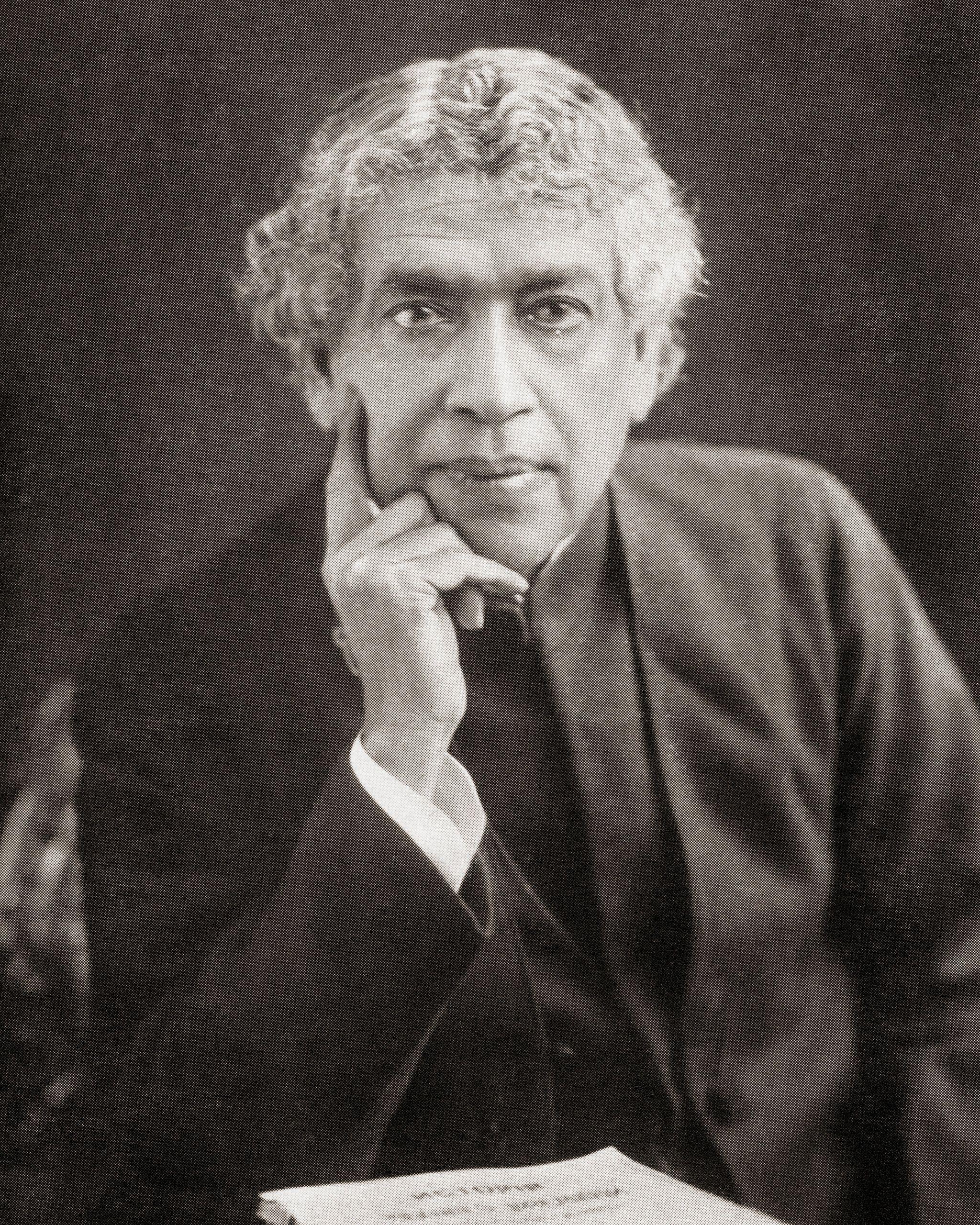
Jagadish Chandra Bose: The Man Who Listened to the Language of Nature
Some scientists discover new things. Some build the instruments that let everyone else see what was hidden. A very few wander across the borders between disciplines as if those borders weren't there. Acharya Sir Jagadish Chandra Bose was one of that few. He was a physicist, a biologist, an experimenter and an inventor. He did pioneering work on short electromagnetic waves, and then on how plants respond to the world around them. On the surface those look like two different careers. For Bose...
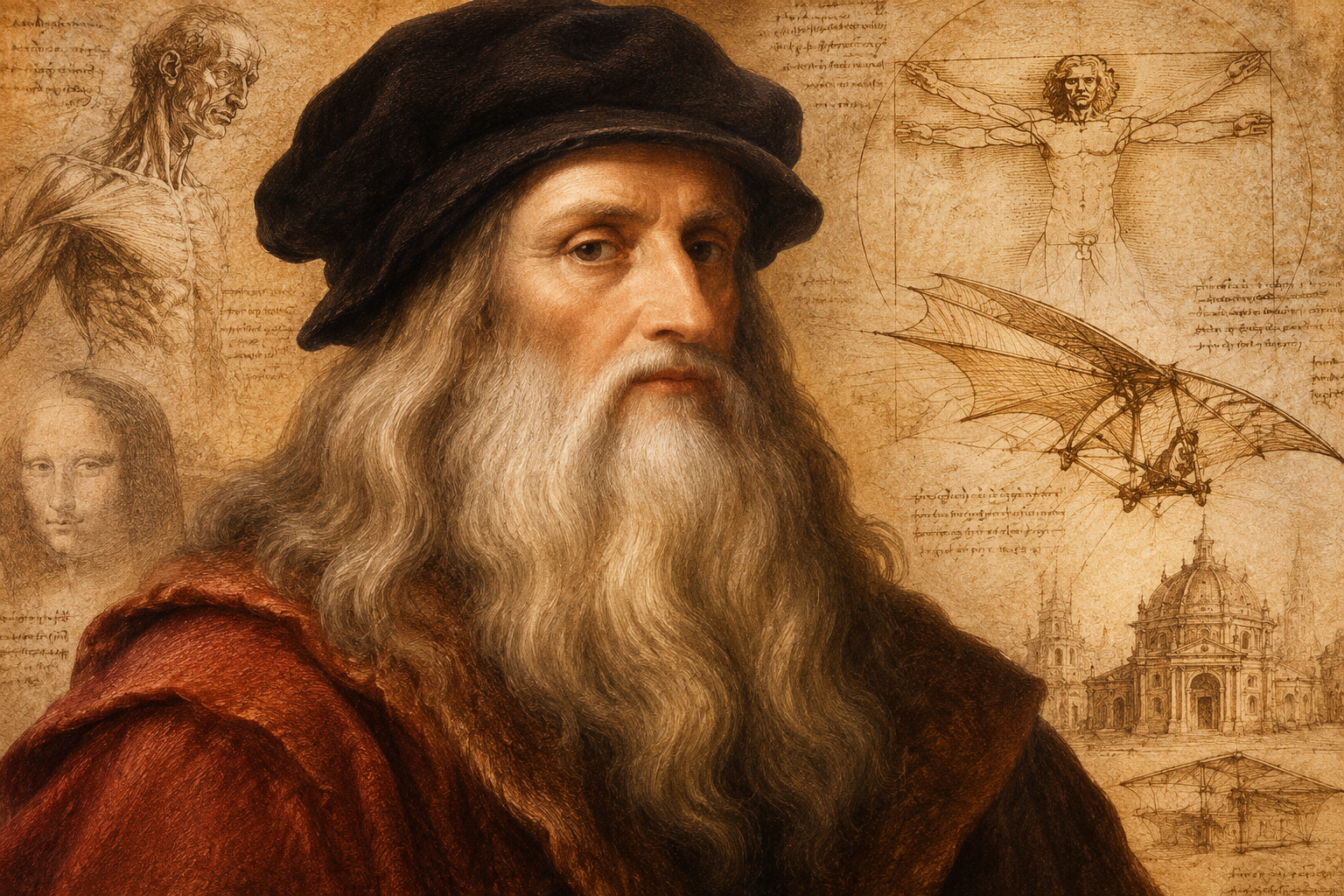
Leonardo da Vinci: The Mind That Refused to Be Defined
He painted faces that seemed to hold secrets, studied the human body like an architect studying a masterpiece, imagined flying machines centuries before aviation and filled thousands of pages with questions about the world. Leonardo da Vinci was not simply an artist. He was a man whose curiosity seemed to have no boundaries. There are artists whose paintings become immortal. There are scientists whose discoveries transform civilisation. And then there are rare individuals who seem to belong...